
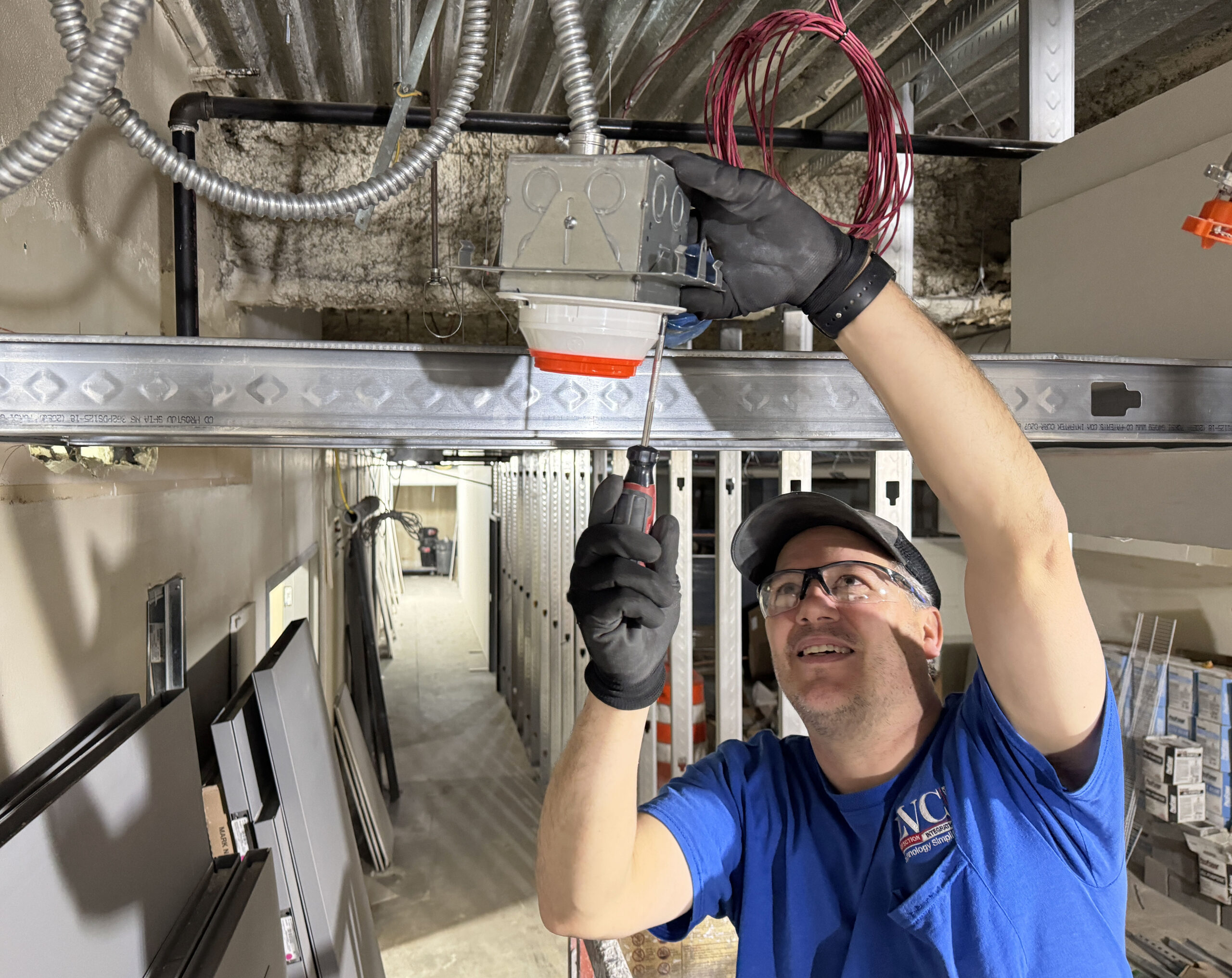
New technology is overcoming traditional challenges to the testing and inspection of smoke detectors and fire alarm systems to ensure these life-saving devices are code-compliant and ready for any emergency. Here’s what facility and property managers, chief engineers, and other professionals tasked with fire protection need to know to capitalize on this promising breakthrough.
Smoke detectors and fire alarm systems are key to protecting people, property, and business operations. They’re also required by fire codes and life-safety standards in many settings, as is proper testing and inspection.
“Regular smoke detector testing and inspections mandated by standards like NFPA 72 are also critical, since unseen malfunctions can increase fire safety risks, delay evacuation efforts, and lead to unnecessary damage and business disruptions,” explained LVC VP of Sales & Marketing Mike Botten, a longtime fire alarm industry veteran.
Testing Procedures
Properly trained facility staff can conduct weekly, monthly, and quarterly visual inspections and alarms. More extensive testing—such as semi-annual, annual, and 5- to 10-year fire alarm system checks—calls for licensed fire protection technicians, who verify that all fire alarm system components, including smoke detector sensors, are functioning properly.
“Benefits of regular testing and inspection include compliance with safety regulations, risk mitigation, and enhanced operational safety,” said Alex Schick, Honeywell FIRE division regional sales manager.
Traditional smoke detector testing methods include using an aerosol smoke detector tester to release synthetic smoke to check a detector’s response. Unfortunately, this process can be slow, costly, and disruptive. Obstacles including locked rooms, high ceilings, inaccessible locations, and large sites can lead to some detectors going untested and hidden risks being missed.
Thankfully, self-testing smoke detectors developed by NOTIFIER by Honeywell and installed and serviced by LVC Companies overcome these challenges—minimizing disturbances while assuring all sensors in even the largest, most complex fire alarm systems are accurately tested.
“They do so by incorporating internal components that generate small amounts of heat and smoke outside of the detector chamber to test photoelectric and thermal sensors,” said Schick. “Once test smoke is generated, an integrated fan pushes it through the detector’s entry points, testing the sensors before finally clearing the chamber. Meanwhile, anti-masking sensors monitor back pressure. This ensures smoke entry points are clear, confirming that external smoke can enter the chamber during a fire.”
Self-testing smoke detectors are particularly useful for industries where accuracy and uptime are critical. These include hospitality, healthcare, data centers, multi-family apartment buildings, group living environments, correctional facilities, and numerous other settings.
The technology also offers enhanced diagnostics and early warnings. These provide insights into false alarms by scrutinizing sensor issues like dust accumulation and indications of poor placement, as well as internal health diagnostics that issue alerts for malfunctions or performance degradation.
Additionally, when paired with the NOTIFIER INSPIRE panel and Honeywell’s Connected Life Safety Services (CLSS) platform, the system produces digitized inspection reports, creating full electronic audit trails that support AHJ (authority having jurisdiction) requirements and reduce administrative burden.
Time and Cost Savings
Self-testing offers significant time savings. With Honeywell’s CLSS mobile app, technicians can conduct automatic tests on detectors with minimal additional effort:
• Connect to the panel and gateway once on site.
• Initiate Self-Test at node, loop, or device level.
• Optional Bluetooth beacon to prove proximity to device for visual inspection.
• Continue with other T&I activities while Self-Test runs.
• Once T&I and Self-Test is completed, automatically generate a report.
“This process can be executed wirelessly via mobile app while on building premises, allowing technicians to test detectors throughout an entire floor, building, or site,” Schick said, noting, “While self-testing does not eliminate the need for visual inspections, these can be conducted simultaneously by checking an icon on the app for Bluetooth-connected detectors. Technicians can efficiently complete visual inspections for all detectors in a room while running tests, significantly compressing what typically takes days or weeks into just a few hours.”
Breaking this down further, Self-Test can save approximately 2.5 days during the commissioning phase for a 400-detector system and reduce the required number of technicians from two (or three for pre-commissioning) to one.
For smaller sites, the benefits are equally significant. In a 50-detector system, two technicians typically spend around 2.5 hours completing tests, which involve one technician walking through the building applying canned smoke to each detector while the other monitors the panel to ensure no actual alarms are triggered during the test. Manually transcribing the inspection report usually takes another hour.
With self-testing technology, a single technician can conduct the same test in about 40 minutes. They can initiate the test from the panel for the entire building, requiring only a brief visual inspection of each detector. The system remains fully operational during testing, and the inspection report is automatically generated and delivered electronically via the CLSS app within minutes.
Technology of the Future, Today
Self-testing smoke detectors and their supporting technologies effectively tackle the major challenges of conventional testing while maintaining, and even improving, the integrity of the process. Key benefits include:
• Enhanced life safety performance.
• Clear evidence of compliance.
• Simplified, evidence-based auditing processes.
Collectively, this technology transforms a traditionally cumbersome process into one that is quick, efficient, and compliant. This innovation reflects the future of smoke detector testing while paving the way for safer environments today.
LVC Companies’ Fire Alarm Services
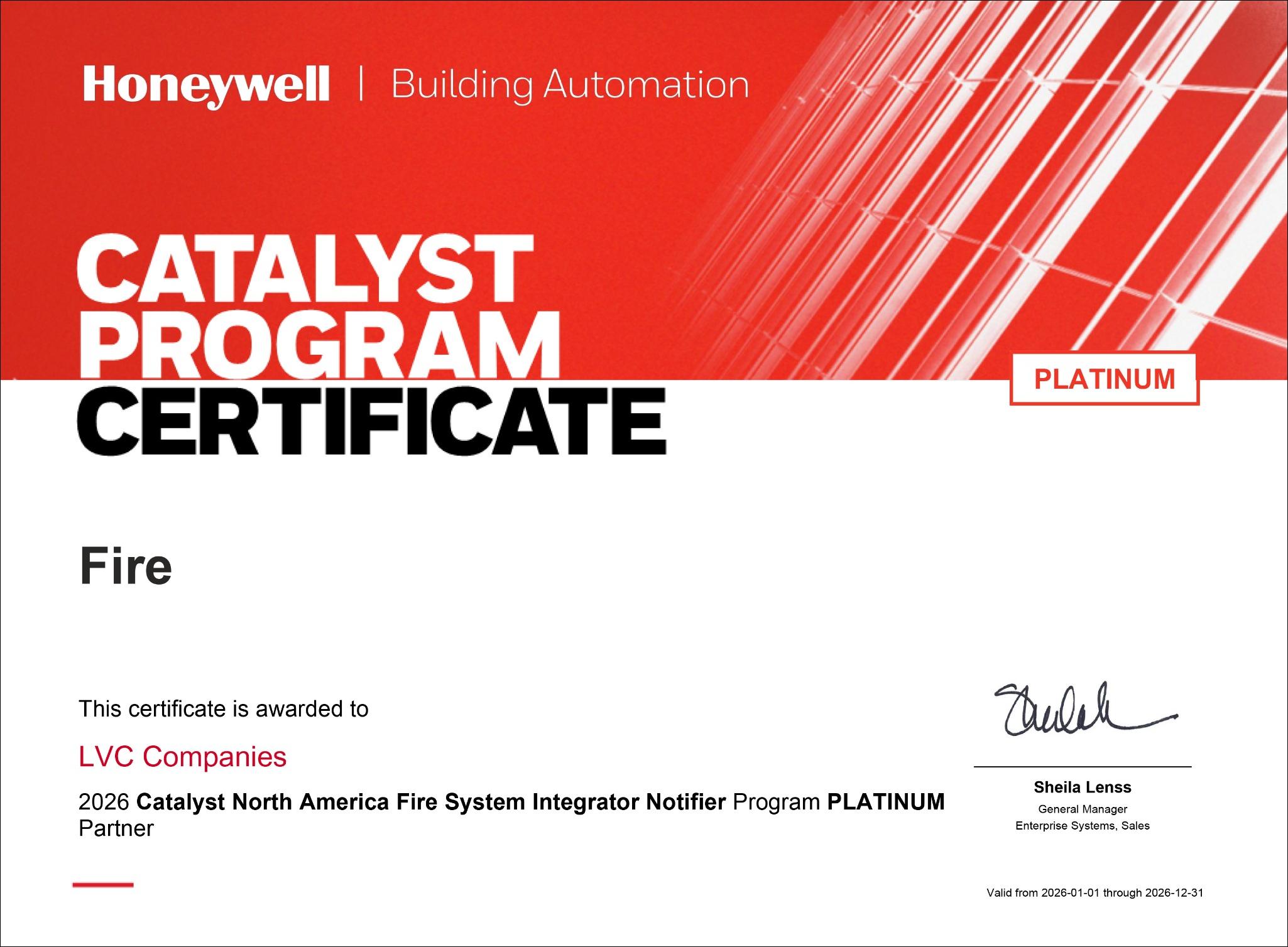
LVC Companies is a platinum-level, authorized NOTIFIER by Honeywell fire alarms dealer in Minnesota, Wisconsin and Arizona with certified technicians authorized to install, inspect, test and service NOTIFIER smoke detection and fire alarm products including self-testing smoke detectors. LVC has consistently earned Honeywell’s top NOTIFIER honors since 1994, including: Multi-Million Dollar, President’s Circle, Diamond of Excellence and Community Service awards.
LVC Companies offers complete fire alarm and life safety system design, installation, testing, and maintenance in Arizona, Minnesota, and Wisconsin. We also offer fire protection including fire sprinklers, portable fire extinguishers, and pre-engineered fire suppression systems for commercial kitchens, industrial settings, heavy mobile equipment, and more. Additional offerings include security such as video surveillance and access control, structured cabling, commercial audiovisual (audio visual) system integration, and emergency communications solutions including Distributed Antenna Systems (DAS).
LVC offices providing fire alarm services include our Minneapolis, Minnesota, headquarters and regional hubs in Duluth, Hibbing, Rochester, and International Falls. LVC sells and services fire alarms in western Wisconsin from our Eau Claire office and Arizona from our Southwest U.S. hub in Tempe.
Contact us today to learn more.